Work Sampling in Data Center Operations
Observe operations and maintenance work in data centres with explicit safety, coverage and comparison limits.
Updated:
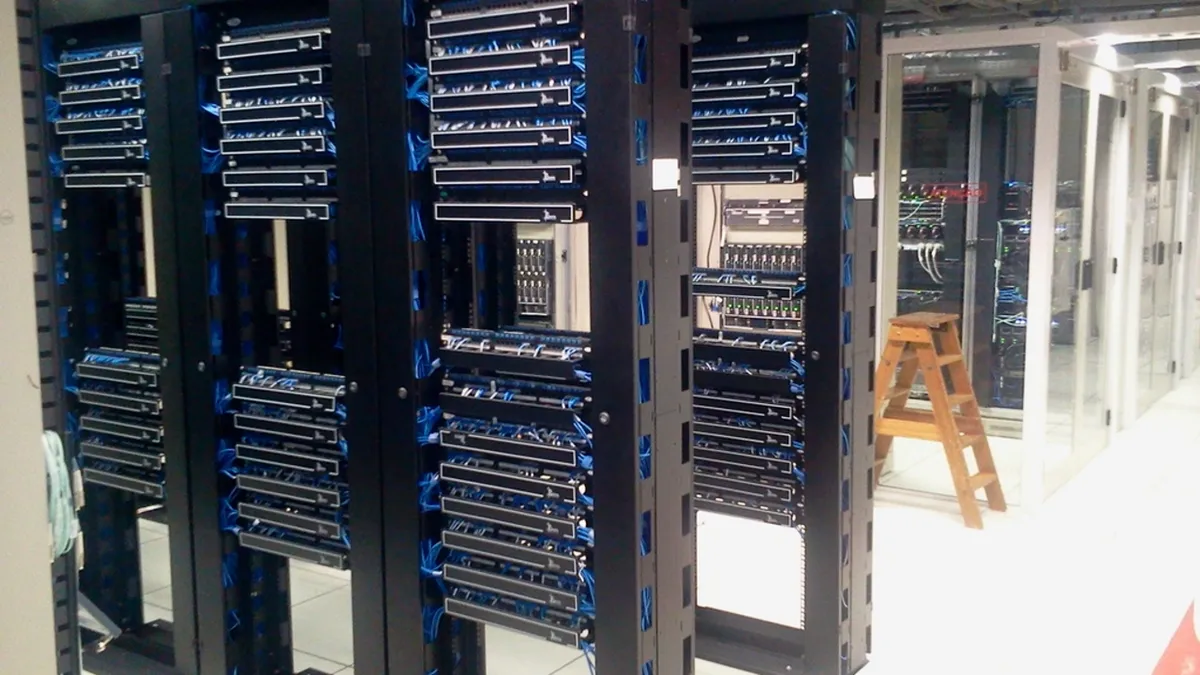
Round-the-clock operations combine monitoring, incident response, changes, maintenance and coordination. Sampling can estimate staff activity distribution; it replaces neither SLAs, reliability metrics nor minimum-coverage analysis.
A quiet screen is not surplus time
Monitoring and readiness to respond may be necessary even without active tickets. Documentation, authorisations, handovers and training also control risk. Do not automatically classify them as unproductive or infer surplus staff from a low intervention share.
SLAs describe specific commitments; they capture neither all activity nor a universal individual score. Uptime Institute's Tier III concerns concurrently maintainable infrastructure, not a guaranteed fixed annual operational availability.
Define categories and units
For technician-instant, distinguish incident response, maintenance, change execution, monitoring, documentation, coordination, logistics, confirmed blocked waiting, breaks and other. Separate monitoring from authorisation waiting. One primary state prevents double counting parents and subcategories.
Not seeing a technician at their desk does not establish absence: they may serve another room, take a break or perform authorised work. Verify reasons through rules and records while minimising identifiers. Equipment and room states require different denominators.
Design for 24/7
Define population, group working hours and calendar. Three seven-hour blocks cover 21 hours, not 24: include or justify the remaining three before claiming complete coverage.
Allocate by person-hours or strata with declared weights. Separate night and weekend samples can investigate differences but need sufficient precision themselves. Randomisation does not eliminate correlation between technicians sharing incidents.
The simple reference n=ceiling[z²p₀(1−p₀)/e²] gives 1,068 at z=1.96, p₀=0.5 and e=0.03. It assumes independence and adequate approximation; it is not a mandatory minimum.
Simulated case: 38 technicians, two sites
Assume four weeks, 1,184 valid participations and 1,920 annual hours per person: 72,960 person-hours. The 8,760 annual calendar hours are not each technician's working hours.
| Scenario group | Rounded proportion | Annual equivalent |
|---|---|---|
| Direct intervention | 22.4% | 16,343 h |
| Monitoring/readiness | 19.4% | 14,154 h |
| Documentation and access | 11.2% | 8,172 h |
| Provisioning waiting | 8.7% | 6,348 h |
| Technical reference lookup | 4.4% | 3,210 h |
| Failure blocking the task | 4.1% | 2,991 h |
| Maintenance window blocking the task | 6.8% | 4,961 h |
| Other logistics waiting | 9.6% | 7,004 h |
| Breaks/handovers and authorised situations | 11.7% | 8,536 h |
| Other | 1.7% | 1,240 h |
These are rounded assumptions; hour totals may differ by rounding, and groups need validation against overlap. Under independence, the conservative 95% margin at 1,184 is 2.85 percentage points; correlated rounds can increase it.
Do not conclude the last groups' 33.9% is avoidable time. Waiting during maintenance is not service inactivity or proof of excessive staffing.
Proposals and valuation
Investigate spare preparation, approvals and documentation with operations and security staff. Anticipatory kits may be trialled while retaining traceability and authorisation. Do not remove night staffing or outsource sensitive documentation from proportions alone; assess simultaneous incidents, skills, response, on-call arrangements and requirements.
A hypothetical wait reduction from 9.6% to 5.2% is 4.4 points: 72,960×0.044=3,210.24 hours, valued at €28/h as €89,886.72. It is equivalent capacity, not cash; do not add it again to avoided staffing or on-call costs. Complete net flows and costs are needed for payback.
Tool and monitoring
WorkSamp supports state planning and recording. Compare results with tickets, response times, failed changes and maintenance quality without inferring causality from association. Sampling certifies neither Tier, ISO 27001, SOC 2 nor SLA compliance.
Sources
NIST: proportion intervals. Uptime Institute: Tier classification. GDPR.