Work Sampling in Service and Office Environments
Study activity distribution in offices without equating visible presence with knowledge-work quality or productivity.
Updated:
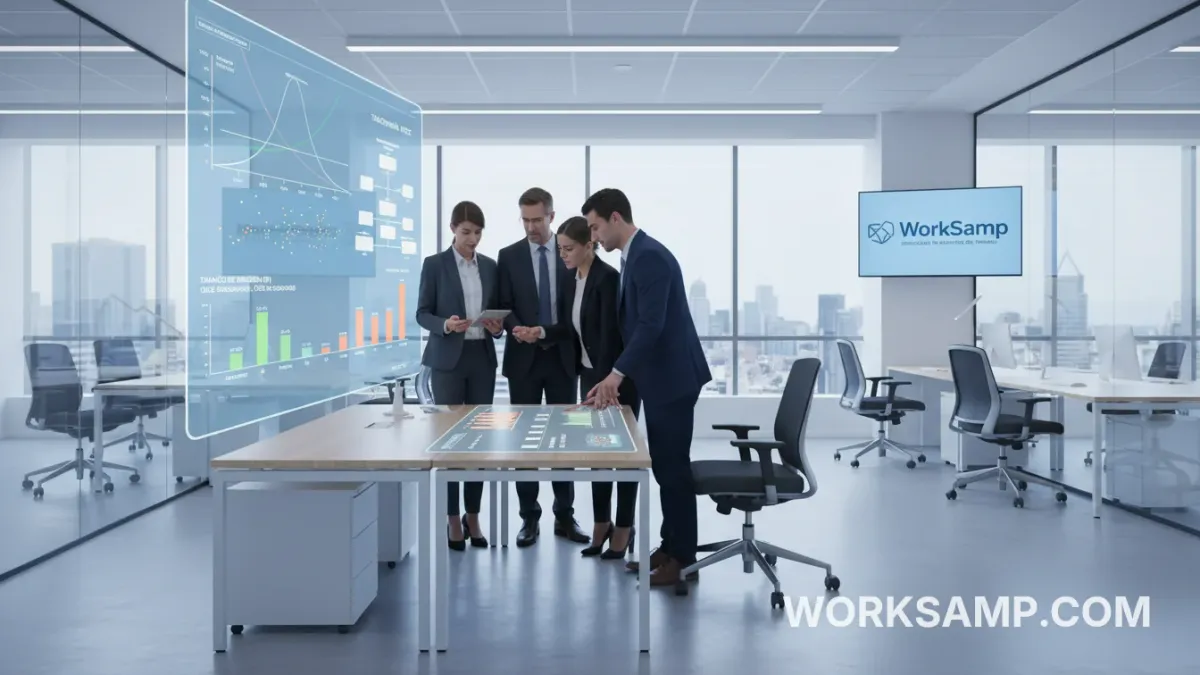
Sampling describes observable states. It does not directly measure thought, intellectual quality or personal worth. An active screen does not establish productivity either; each method needs a question and scope.
Activity and outcomes
Study service, document preparation, coordination or confirmed authorisation waiting. Define person-time, period and included hours. Do not assume conversation or reading is waste or that an observer sees “effective cognitive time”.
Where relevant, complement with completed requests, lead times, demand and quality. Activity share alone does not establish useful outcomes or justify comparing people with different roles.
Classification
Trial non-overlapping categories: direct service, preparation, coordination, confirmed waiting, breaks and unobservable. Define simultaneous-task rules. Documents and meetings may be necessary work.
Explain purpose and data use and test observer agreement. There is no universal 35–45% “cognitive time” benchmark or guarantee of capturing 100% of activity. Some tasks require self-report or context, each with its own biases.
Sample and precision
Under independent simple sampling, n₀=ceiling(z²p₀(1−p₀)/e²). At two-sided 95%, p₀=0.5 and five points, it gives 385; at three points, 1,068. Neither that count nor an app guarantees representation. Cover working days, roles and loads and assess weights and dependence.
A binary reading is Bernoulli; its count has a binomial model under independence and common p. Normal approximation concerns the estimator, not each state. Choose suitable intervals and disclose limits.
Simulated example
One hundred and twenty of six hundred eligible readings are confirmed information waits: 20%. This does not mean every person waits exactly 1.6 hours in every eight-hour day. Aggregate hours need compatible exposure and weights. A closing day does not automatically represent the month.
Investigate incidents using process records before assigning responsibility. Comparable before/after data may show association; demonstrating intervention effects requires consideration of other factors.
Privacy and occupational health
Minimise content: “document handling” may suffice without copying emails or client data. Do not claim anonymity when timing or role identifies people. Assess purpose, lawful basis, notice, retention, access and rights; GDPR does not approve a technique by name.
Fatigue, health and psychosocial-risk assessment need appropriate methods and professionals. Mouse activity or isolated observation does not diagnose these conditions. Covert observation is not a methodological requirement.
Tools
Worksamp supports planning, capture and distribution analysis. It is neither screen monitoring nor “human OEE” certification. Equipment OEE has its own denominators; service metrics need defined flow, capacity and quality.
Working-time records answer presence and schedule questions. Stopwatch study can complement repetitive tasks. No alternative has zero intrusion, universal cost or guaranteed statistical superiority.
Sources: NIST, GDPR. See Worksamp for the available workflow.