Digitizing a Work Sampling Study
Digitise sampling plans and data capture without confusing automation with freedom from errors or bias.
Updated:
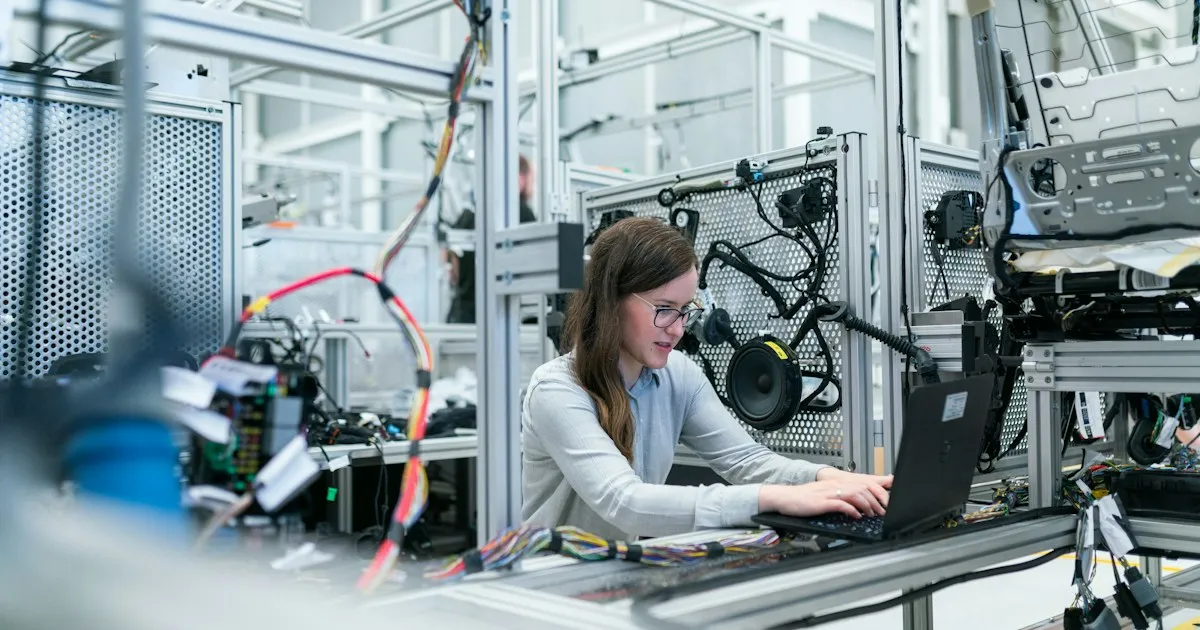
Moving from paper to an app can reduce transcription and support review. Evaluate it with a pilot using matching methods, coverage and resources: measure errors, recording time, delays and total cost. Do not extrapolate usability gains into statistical or economic gains without measurement.
1. What remains and what can change
Sampling still needs a population, unit, categories, selection probabilities and missing-visit rules. A round every fifteen minutes is not random because it is recorded on a phone. Paper, spreadsheets and apps can each support an appropriate design; an interface does not validate it.
Digital capture avoids some retyping, but requires checks of category selection, actual time, duplicates, local storage, permissions and synchronization. No universal paper error rates of 2–5%, digital rates below 0.1%, metadata completeness above 98% or random-compliance rate above 99% are asserted.
2. Use comparable evaluation measures
| Question | How to check |
|---|---|
| Is transcription reduced? | Time matching administrative tasks during a pilot |
| Are there fewer errors? | Compare with a reference using predefined rules |
| What happens offline? | Test capture, recovery, pending records and conflicts |
| Is traceability sufficient? | Review originals, changes and exports |
| Is cost sustainable? | Include licenses, devices, training, support and validation |
Assuming ten administrative hours/week for fifty weeks gives 500 hours; this is teaching arithmetic, not a typical saving. Freed time may become capacity rather than lower expenditure.
3. Configuration and categories
Define categories before choosing buttons. VA, NVA, delay and preparation overlap if NVA already includes preparation; define hierarchy or priority rules. Test simultaneous states and an unknown code. A 50–80-record pilot can expose operational problems but does not validate every statistical assumption.
Photographs or personal identifiers are not requirements for good sampling. Collect only necessary, authorized data and minimize identification. Choosing a tool does not authorize new uses of images or employment information.
4. Standard error is not relative confidence margin
An initial proportion-planning approximation is:
$$n=\left\lceil z^2p_0(1-p_0)/e^2\right\rceil$$
With p₀=0.5, e=0.05 and z=1.96, it gives 385 independent visits. Here e is an absolute confidence margin, not a standard deviation.
$$\widehat{SE}=\sqrt{\hat p(1-\hat p)/n}$$
$$e_{abs}\approx z\widehat{SE},\qquad e_{rel}\approx z\widehat{SE}/\hat p$$
SE/p̂ is relative standard error, not a 95% relative margin: the critical value is missing. It is undefined at p̂=0. There is no universal 10% threshold validating every study. See NIST sample-size design.
5. Times, notifications and coverage
Select times within valid windows with known probabilities. If adding variation to a time grid, ensure every visit stays inside the shift and document the resulting design: a jittered grid is not automatically simple random sampling. For interval-based selection, declare boundaries and weights.
A notification does not guarantee a completed visit; delivery depends on connection, permissions and device settings. Record observation time and distinguish local saving from synchronization. WorkSamp documents local offline capture; review pending records before deletion, reinstallation or device changes.
6. Analysis and interpretation
A simulated example with 135 category readings among 385 valid readings gives p̂=135/385≈0.35065, SE≈0.024319 and approximate two-sided normal 95% margin≈0.047665. The interval is [30.30%, 39.83%], under independence. Wilson can be preferable to Wald and is the documented advanced-report method. Instant calculation does not remove bias or coverage problems.
Classical p-chart subgroup limits are p̄±3√[p̄(1−p̄)/nᵢ], bounded to [0,1], with p̄ weighted by subgroup size. Appropriate models and subgroups are required; an outlying point does not identify a cause. Pareto ranks contributions rather than imposing 80/20 or proving savings.
Repeatedly checking intervals and stopping at a favorable width may alter nominal coverage. Charts and alerts are not automatic validity certificates.
7. Equivalent hours and valuation
In a simulated scenario, a representative 35% share over a matching period of twenty people×eight hours×ten days gives:
$$H=0.35\times20\times8\times10=560\text{ person-hours}$$
At an assumed €25/hour, H×25 is €14,000 of valued capacity. It is not demonstrated opportunity cost or cash savings: demand, alternative use, avoidable cost and double-counting checks are needed.
To evaluate digitalization costs, obtain current commercial terms and compare recording, preparation, review, training and support. A useful business case documents population, method, period, baseline and outcome calculations; released capacity does not automatically equal cash savings.
8. Test the migration
Retain original data, test capture and export, and independently compare results. Thirty seconds repeated 385 times is about 3.21 hours; this does not establish “additional” hours without a comparison baseline. Five seconds can be a usability target, not a statistical rule.
Test actual devices, safety conditions and connectivity. Being a PWA does not mean every operation works offline. An external spreadsheet can validate calculations; it need not be prohibited merely because it is outside the app.
9. Product scope and next steps
Documented WorkSamp features include planning, observations, reports, exports, permission-based collaboration and synchronization review. No native ERP/MES/SCADA integration, photographic capture, analytical AI or specific bias-alert function is established here. Request a demonstration of the workflow you need.
Choose digitization using pilot results, not by declaring paper obsolete. Cronometras is for time studies and Induly for working-time records; studies are not automatically shared. ASETEMYT and ProdCont are methodological-support options.